
The flip top bottle is not new.
The economics are changing.
The traditional “hinged” or “swing” closure for beverage products will enter a new packaging landscape: one characterized by new packaging regulations, lightweighting, premiumization, re-fill options, and recyclability.
It’s a change that’s important to procurement teams.
A beverage company ordering 20,000 bottles for 2026 isn’t just ordering glass containers. It’s purchasing a blend of bottle weight, sealing ability, compatibility with the bottles, space efficiency during transportation, visual appeal on the shelf and regulatory risk.
This is where a capable flip top bottle company becomes more than a bottle supplier.
It becomes part of the packaging-development process.
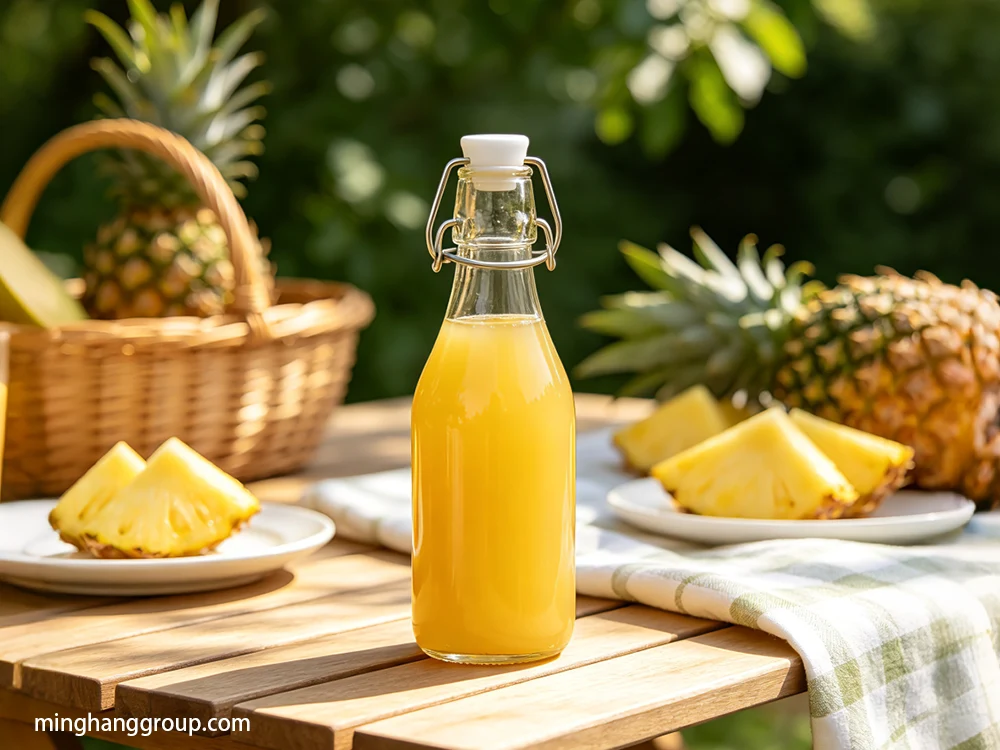
1. What Is Driving Flip Top Bottle Packaging in 2027?
Three forces are particularly relevant: material efficiency, closure redesign, and customization.
The Packaging and Packaging Waste Regulation (PPWR) of the European Union (EU) will be enforced starting 12th August 2026. The regulation sets a more comprehensive framework for packaging recyclability, reuse, waste reduction and circularity, featuring more requirements that will be gradually implemented over time, including in the mid-2030s and later.
In the case of the beverage packaging sector selling into Europe, 2027 is thus somewhere between today’s requirements and a much tougher future environment of compliance.
That changes the design conversation.
Instead of asking, “Can we make this bottle cheaper?” buyers increasingly need to ask:
Can we reduce material without compromising performance?
That is a very different question.
2. Lightweighting Will Become a Bigger Design Constraint
Glass is strong, inert and very popular for recycling, and looks good.
It is also heavy.
The logistics equation is very different when a 500ml glass bottle weighs 350g versus one that weighs 250g. This is a difference of 100g per bottle. At 100,000 units, that equates to an extra 10tons of additional glass, not to mention secondary packaging and transportation.
Numbers get multiplied.Small numbers turn into large numbers.
This is why lightweight flip top bottle packaging deserves attention.
The objective should not simply be “make the glass thinner.” A competent manufacturer must evaluate bottle geometry, stress concentration, base structure, neck strength, closure load, filling conditions, and transport performance together.
Today’s glass-packaging industry is already trending in this direction. Lighter bottle design and recycled content are two key sustainability issues for industry packaging specialists in 2026 and future, they say.
There is already less interest in whether lightweighting will be important, and more about how aggressively a bottle can be lightweighted without compromising the performance of the bottle.
3. The Closure Is Becoming a Design Project of Its Own
This is the part inexperienced buyers often miss.
The bottle gets all the attention.
The closure determines whether the package actually works.
A flip top or swing top system may involve a cap, hinge, wire mechanism, gasket, stopper, neck finish, and sealing interface. Each component introduces another tolerance.
The bottle may look flawless but the seal may not be consistent due to the closure.
That is why future sustainable flip top bottle closures will more and more concentrate on material reduction, simplified construction, recyclability and component compatibility.
In April 2026, Amcor launched a new 55mm sauce packaging 5-piece Flava Flip Top Closure. The closure’s redesigned design resulted in a weight reduction of 1.8g (18.7%), down from the previous generation, Amcor said. The company has also reported that the closure is monomaterial and is made with considerations for circularity.
That is a closure innovation rather than a bottle innovation.
But the commercial lesson is broader: grams matter even when the consumer barely notices them.
Custom Shapes Will Remain Important for Premium Beverages
Standard cylindrical bottles are efficient.
They are also everywhere.
A premium beverage brand may therefore want a bottle that communicates its identity before the customer reads the label.
Square.
Rounded shoulders.
Short neck.
Heavy base.
Embossed logo.
Colored glass.
Frosted surface.
Custom proportions.
A capable flip top bottle company can approach customization in two ways: use an existing mould platform or develop a new mould.
The first approach usually reduces tooling expenditure and development time.
The second creates greater differentiation.
Neither is automatically better.
The commercial calculation depends on annual volume, target retail price, brand positioning, and expected product lifespan.
Current supplier offerings demonstrate that flip top glass bottles are available in common capacities such as 250ml, 330ml, 500ml, 750ml, and 1,000ml, with some manufacturers also offering customized shapes and surface decoration.
For a new beverage brand, using an existing 500ml bottle with customized printing may make more financial sense than commissioning an entirely new bottle.
For a global premium beverage line expected to sell hundreds of thousands of units annually, proprietary tooling can be a different proposition.
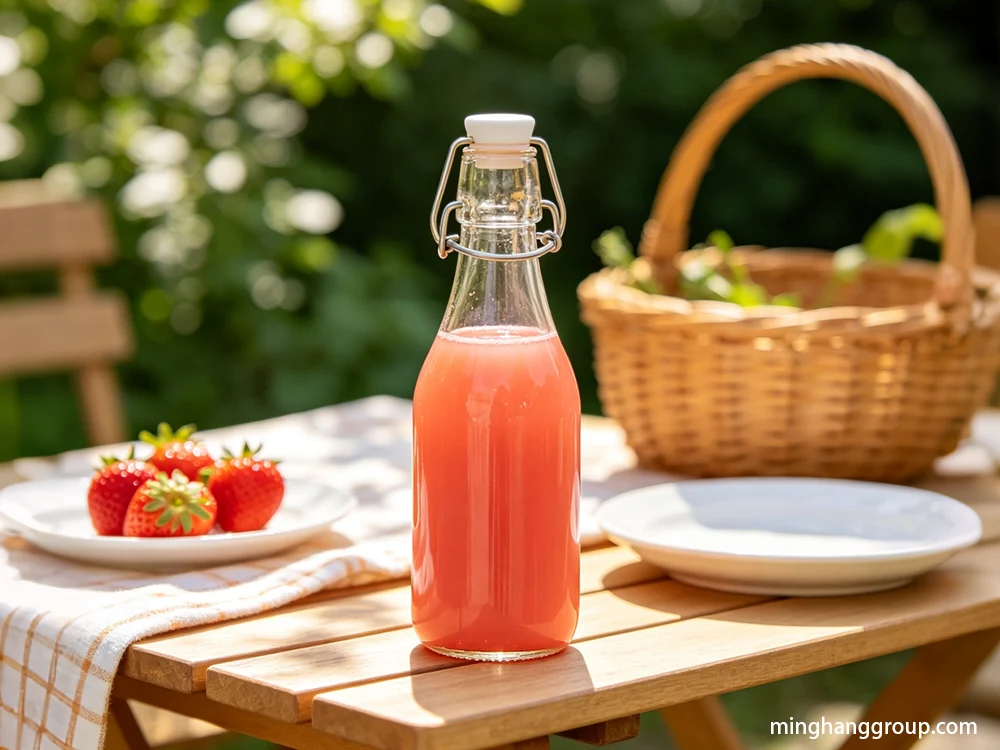
4. Flip Top Packaging Comparison
| Packaging Approach | 主要优势 | Main Risk | Suitable Buyer |
| Standard flip top glass bottle | Fast sourcing and lower development cost | Limited differentiation | New beverage brands |
| Customized decoration | Stronger shelf identity without new mould | Decoration adds process complexity | Established brands |
| Custom bottle shape | Distinctive brand architecture | Higher tooling and development cost | Premium beverage brands |
| Lightweight bottle | Lower material and transport weight | Requires engineering validation | High-volume buyers |
| Recyclability-focused closure | Better alignment with circularity goals | Component compatibility must be verified | EU-focused brands |
5. Recyclability Will Become a Specification, Not a Marketing Word
“Recyclable” sounds straightforward.
它不是。
A package contains multiple components. Bottle. Closure. Seal. Label. Adhesive. Decoration. Secondary packaging.
The recycling performance of the overall system depends on more than the glass itself.
The EU PPWR states that packaging placed on the market must be recyclable, while detailed recyclability performance requirements are phased in over time. The regulation also requires technical documentation supporting packaging recyclability assessments.
For procurement teams, this means packaging specifications should become more detailed.
Do not simply write:
Eco-friendly flip top bottle.
Write:
Glass bottle + defined closure material + defined decoration + specified packaging weight + recyclability requirements for target market.
That is measurable.
That can be tested.
That can be documented.
6. Customization Will Move Toward Complete Packaging Systems
The old sourcing model is simple:
“Send me the bottle price.”
The new model is more complicated.
Bottle.
Closure.
Seal.
Decoration.
Carton.
Pallet.
Testing.
Shipping.
The best flip top bottle company for beverage brands should therefore be able to explain how the components work together.
Some current glass-bottle suppliers offer flip top bottles in multiple capacities and support processes such as silk-screen printing, hot stamping, frosting, coating, and other surface treatments.
That creates opportunities for brands to differentiate the same basic bottle platform across multiple products.
One bottle family.
Several SKUs.
Different colors.
Different graphics.
Different closure finishes.
That can be commercially more efficient than developing a completely new bottle for every beverage.
7. Beverage Compatibility Cannot Be Ignored
A flip top bottle used for still water is not necessarily specified the same way as one used for kombucha, beer, carbonated drinks, juice, syrup, or fermented beverages.
Pressure changes the equation.
Acidity changes the equation.
Temperature changes the equation.
Cleaning and reuse alters the equation.
Here is a current list of glass flip-top applications provided by a supplier: water, juice, Kombucha, beer, milk, vinegar, sauces and syrups. This wide range of applications can be helpful when using it as a product-market reference but should not be taken to indicate that one bottle specification is inherently appropriate to any formulation.
Buyer must provide application-specific validation.
This is especially critical for pressurised products.
Prior to the manufacturer confirming the final bottle configuration, a procurement specification should define the type of beverage, the filling process, the temperature the beverage will be subjected to, how the beverage will be stored, the distribution environment in which the beverage will be used, and the required closure.
8. How to Choose a Flip Top Bottle Supplier
Price comes last.
At least initially.
Start with capability.
A serious supplier evaluation should examine:
- Available bottle capacities
- Existing mould library
- New mould capability
- 玻璃重量
- Neck dimensions
- Closure construction
- Gasket material
- Leak testing
- Decoration capability
- Packaging method
- MOQ
- Sampling process
- Production lead time
- Batch consistency
- 出口经验
- Destination-market requirements
The numbers can vary dramatically between suppliers.
One manufacturer currently publishes a 5,000-piece MOQ for a customized flip-top glass bottle, while another large-scale manufacturer publishes an MOQ of 300,000 pieces for its flip-top glass bottle range.
That is not a minor difference.
It tells you that “custom flip top bottle” is not one standardized purchasing category.
| Supplier Model | Example Published MOQ | Typical Commercial Position |
| Smaller customized production | 5,000 pcs | More accessible for medium B2B projects |
| Large-scale factory production | 300,000 pcs | Better suited to very high-volume programs |
| Stock bottle + decoration | 因情况而异 | Useful for testing and smaller launches |
| New mould development | Project-dependent | Suitable for proprietary bottle designs |
Published MOQ figures are supplier-specific examples, not industry-wide standards. Buyers should always confirm the MOQ for the exact bottle, decoration, closure, color, and mould configuration being quoted.
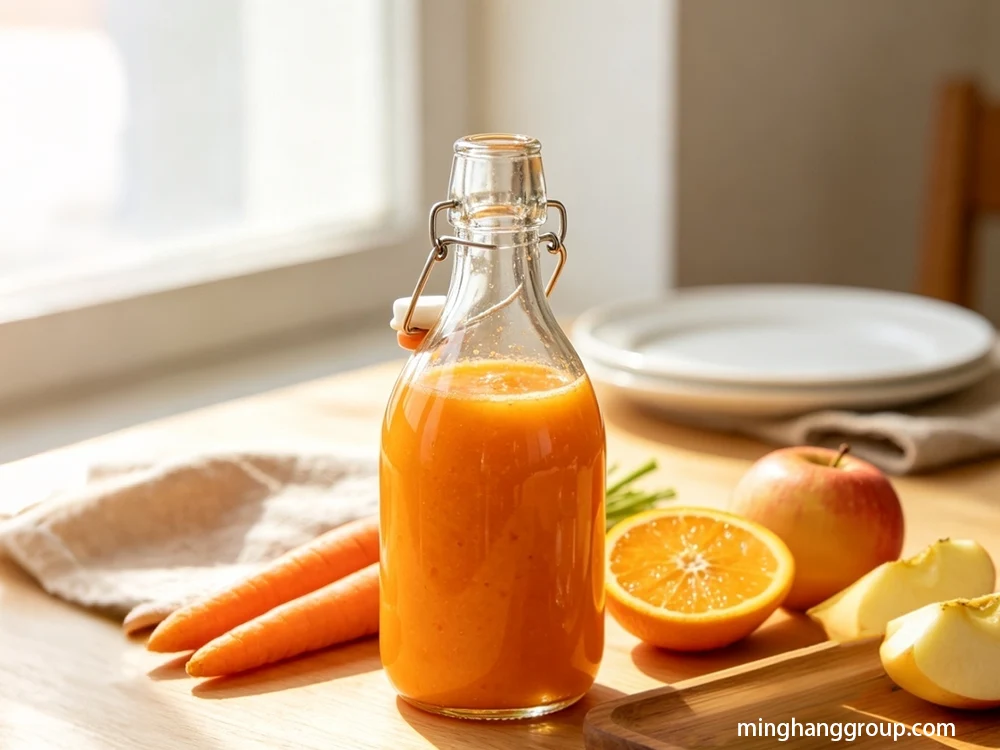
9. Lightweighting Will Also Affect Logistics
Mosteb 是一家专业的玻璃蜡烛罐工厂,专门为品牌商、批发商和分销商定制玻璃蜡烛容器。
为了降低开裂风险,Mosteb 通过以下方式为客户提供支持:
- 玻璃罐设计优化
- 生产质量控制
- 样品测试
- 批量生产
- 出口包装解决方案
从最初的产品开发到最终的出货,Mosteb 专注于创造符合商业蜡烛生产要求的可靠玻璃蜡烛罐。
10. Digital Prototyping Will Reduce Some Development Risk
Custom bottle development traditionally requires drawings, moulds, samples, revisions, and pilot production.
That process can become expensive when a design changes repeatedly.
Modern suppliers increasingly use 3D modelling and physical prototyping before mass production. Some custom glass manufacturers now advertise 3D-printed prototypes so buyers can evaluate the shape before committing to full production.
That is useful for more than aesthetics.
A prototype can expose:
- Poor hand feel
- An unstable base
- An awkward label panel
- Excessive bottle weight
- Closure interference
- Incorrect proportions
- Insufficient grip area
A CAD file may look perfect on a screen.
Your customer has hands.
The physical prototype wins.
11. What Will Separate Strong Flip Top Bottle Companies in 2027?
The best separation might not be in the size of your catalogue.
May be an engineering control.
A manufacturer who is able to discuss bottle weight, the fit of closure, mould cost economics, decoration tolerances, packaging configuration and production validation is doing something different from a trader who is just passing on a catalogue.
That distinction becomes more important with each passing day, when beverage companies are going toward increasingly customized packaging.
The procurement team should therefore evaluate the supplier’s manufacturing process, not merely the finished product photograph.
Ask for drawings.
Ask for samples.
Ask about tolerances.
Ask what happens when a batch falls outside specification.
Ask who owns the mould.
Ask how closure compatibility is verified.
Ask how the supplier handles defects.
And ask what changes if your annual volume doubles.
Those answers reveal far more than a product catalogue.
12. FAQ
What are the major flip top bottle trends for 2027?
The major trends are expected to include lightweight glass, more recyclable closure systems, customized bottle shapes, improved component compatibility, digital prototyping, and packaging designs optimized for circularity. These trends reflect both brand differentiation requirements and increasingly formal packaging sustainability requirements in major markets.
How can a flip top bottle company support beverage customization?
Customization can be achieved by modifying the shape of the flip top bottle, engineering the mould, modifying the capacity, changing the glass colour, decorating the glass surface, selecting the closure style and configuring the packaging. Advanced manufacturers can also offer CAD development services, prototypes, sampling, production validation services, and co-sourced bottle and closure.
Can light-weight flip-top glass bottles be used for beverages?
If the bottle design is engineered and validated for the application, lightweight flip top 玻璃瓶 could be appropriate for beverage products. The buyer should take into account filling temperature, internal pressure, bottle shape, closure performance, transport conditions, formulation of the product – not just weight of the bottle.
What makes a flip top closure recyclable?
A recyclable flip top closure depends on its material composition, design, collection infrastructure, sorting system, and applicable market requirements. For EU sales, buyers should evaluate the complete packaging system against the applicable PPWR requirements rather than treating the closure as recyclable simply because its base material is technically recyclable.
How much does a custom flip top bottle cost?
Custom flip top bottle pricing depends on bottle capacity, glass weight, mould requirements, closure construction, decoration, order volume, packaging, and shipping. Existing moulds can reduce development costs, while proprietary moulds introduce tooling and sampling expenses that need to be amortized across the expected production volume.
What should beverage brands ask a flip top bottle supplier?
Beverage companies should inquire about the Minimum Order Quantity (MOQ), bottle weight, capacity, dimensions, neck finish, material of closure, specification of gasket, leak test, decoration, mould ownership, sample, production lead time, quality control (QC) process, export packaging, and suitability of application. These questions help to compare quotations from suppliers on a like-for-like basis.
 ZH
ZH  EN
EN  FR
FR  DE
DE  RU
RU  IT
IT  ES
ES  PT
PT  AR
AR  TR
TR  KO
KO  JA
JA