
Three words first.
Most buyers guess.
And that is exactly why so many importers lose money on glass packaging: not because factories are always dishonest, but because honey jar quality defects often sit in the gray zone between “cosmetic variation” and “functional failure,” and suppliers know most overseas buyers do not have the technical language—or the inspection process—to challenge that distinction.
I’ve seen it happen.
A buyer receives a pristine sample. Crystal-clear walls. Perfect cap fit. Smooth neck finish. Then the full 80,000-piece container arrives, and suddenly 4.7% of jars have sidewall bubbles, 2% show neck thread deformation, and a few hundred fail leak testing after capping.
And the supplier says something familiar.
“Within normal tolerance.”
But whose tolerance?
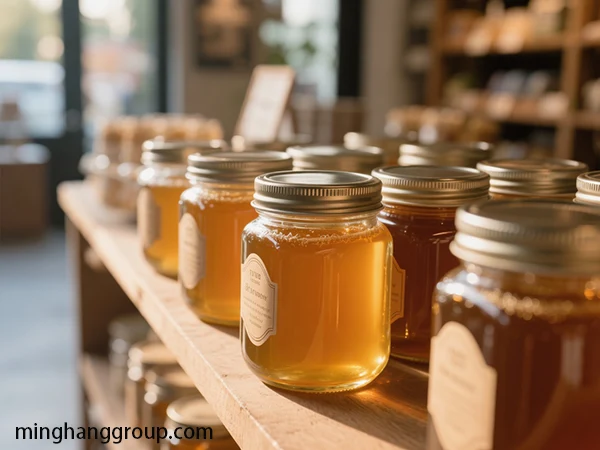
Why Honey Jar Defects in Bulk are More Common Than Buyers Expect
Glass looks simple.
It is not.
Commercial potes de mel are typically made from soda-lime glass, a material composed primarily of silicon dioxide (SiO₂), sodium oxide (Na₂O), and calcium oxide (CaO). At industrial scale, even tiny shifts in furnace temperature—sometimes as little as 12°C—can alter viscosity enough to create defects that are invisible at first but become expensive after filling, labeling, or shipping.
So here’s the hard truth.
Most factories do not optimize for perfection. They optimize for yield.
That means the internal KPI is not “zero defects.” It’s “ship enough acceptable product to pass contract inspection.”
Different goal. Different result.
According to the U.S. Food and Drug Administration food packaging guidance, packaging materials must remain safe under intended conditions of use, but the regulation does not define your acceptable cosmetic defect rate. That burden falls on the buyer.
And many never define it.
The Defect Categories Suppliers Rarely Explain Clearly
This matters.
Because not every defect means the same thing, and many wholesale websites simplify the issue to “minor defects are acceptable,” which is dangerously vague when you’re buying 200,000 units for a food brand.
Cosmetic Defects
These are usually surface-level and may not affect performance.
Examples include:
Minor scuffing
Slight mold seam visibility
Tiny enclosed bubbles (<0.5 mm)
Slight color variation due to recycled cullet ratios
But even here, context matters.
A tiny bubble in a generic storage jar may be acceptable. The same bubble in a premium retail honey jar sold in a transparent gift box? That can trigger customer returns and bad reviews.
So “acceptable” is market-dependent.
Functional Defects (Where Money Disappears)
This is where importers get burned.
Functional defects directly impact usability, seal integrity, and safety.
Common examples include:
Neck thread distortion
Uneven wall thickness
Large air bubbles near shoulder
Rim chips
Base tilt
Stress cracks
Height inconsistency causing capping issues
And once those appear at scale, your filling line becomes the first place the problem surfaces.
Not the warehouse. Not the sample review.
The line.
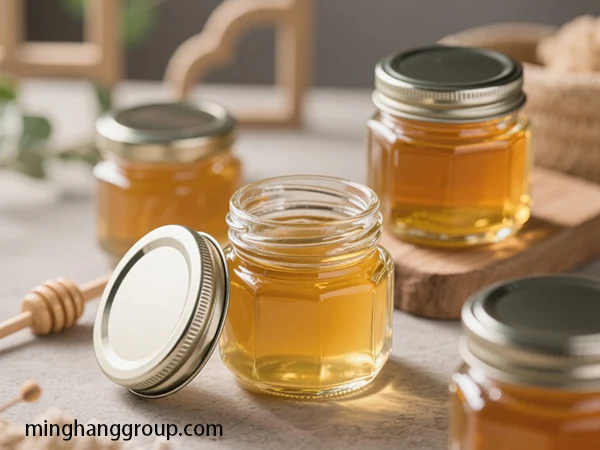
Why Uneven Wall Thickness is The Silent Cost Driver
I’ll be direct.
Uneven thickness is probably the most underestimated honey jar quality defect in bulk orders.
A jar may look perfectly fine to the eye, but if one side measures 2.9 mm and the opposite side 3.8 mm, thermal stress distribution changes dramatically during hot-fill operations.
Honey is often filled at 45–65°C depending on viscosity and processing. That thermal differential can create stress concentration zones, especially when jars cool rapidly after capping.
Then a week later, cracks.
Not immediately. Later.
That delay makes supplier claims harder.
Honey Jar AQL Standards (The Number Buyers Should Negotiate First)
Ask ten suppliers.
You’ll get ten different answers.
AQL—Acceptable Quality Limit—is one of the most misunderstood parhts of bulk glass sourcing. Many importers never specify it, which means glass factory defaults to whatever internal standard benefits them.
Typical professional benchmark:
| Inspection Item | Suggested AQL | Risk Level |
| Critical defects (cracks, broken rims) | 0 | Immediate rejection |
| Major defects (thread distortion, leak risk) | 1 | Alto |
| Minor defects (small bubbles, seam lines) | 2.5 | Médio |
| Cosmetic-only marks | 4 | Baixo |
This table alone can save thousands.
Because if you don’t define AQL before production, you’re negotiating after the problem exists.
That’s the weakest position.
Real-world Case Studies From 2024–2025
Let’s move beyond theory.
In 2024, Reuters business manufacturing coverage highlighted continued pressure on industrial packaging manufacturers due to energy and freight cost volatility, which directly affected glass production schedules and material sourcing consistency.
That’s not just macroeconomics. It means some factories reduced furnace downtime and extended mold life past ideal replacement cycles.
And mold wear matters.
Another case: the U.S. Consumer Product Safety Commission recalls database documented multiple glass-container-related recalls where thermal stress and breakage under normal use created injury risks. While not all were honey jars specifically, the defect patterns are nearly identical: wall inconsistency, internal stress, and rim weakness.
I’ve inspected shipments with the same profile.
The jars looked fine in cartons.
Then failed under vacuum.
How to Inspect Honey Jar Defects in Bulk Orders
This is where professionals separate themselves.
Not by negotiating price. By controlling inspection.
Quais são os padrões AQL para embalagens de vidro?
Os padrões AQL estabelecem uma taxa de defeitos aceitável para embalagens de vidro, que permite 0,15% de defeitos críticos e 4,0% de todos os outros defeitos, de acordo com as normas de teste ISO 2859 Nível II, que os fabricantes de frascos conta-gotas de vidro seguem.
O controle de qualidade de vidros farmacêuticos utiliza marcas como pontas, fragmentos internos e rachaduras no acabamento, além de todas as partículas, como defeitos críticos que exigem a rejeição imediata do lote ao atingirem os limites de AQL de 0,15 a 0,65%.
Você detecta o balanço do pássaro em garrafas de vidro Ao iluminar por trás o recipiente vazio e girá-lo lentamente, revela-se um fino filamento de vidro interno que se estende por todo o espaço entre as paredes e a base, o qual representa um defeito hipercrítico que deve ser zero em remessas de produtos farmacêuticos.
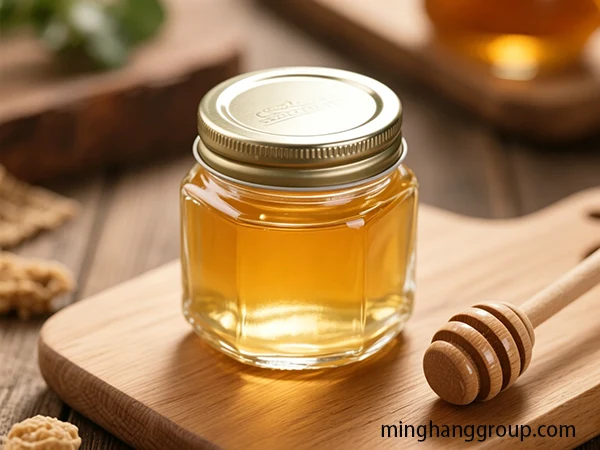
Bulk Honey Jar Quality Control Checklist
Use this.
Every shipment.
Measure wall thickness at 8 points
Use ultrasonic thickness gauge. Accept ±0.4 mm maximum variation for standard 250–500 ml jars.
Inspect neck thread dimensions
Use digital caliper. Compare to closure specification (e.g., TO-63, TO-70).
Perform leak inversion test
Fill sample jars with dyed water. Cap. Invert for 24 hours.
Conduct thermal shock simulation
Heat to 60°C. Cool to 20°C. Monitor cracking.
Stress check with polarized light
This reveals residual annealing stress invisible to normal inspection.
Simple? Yes.
Skipped by many buyers? Also yes.
Acceptable Defects in Glass Honey Jars vs Rejection Criteria
Factories will often argue.
You need objective criteria.
| Defect Type | Acceptable? | Reject? | Notes |
| Tiny enclosed bubble <0.5 mm | Yes | No | Cosmético |
| Bubble >1.5 mm near shoulder | No | Yes | Structural risk |
| Mold seam visible | Yes | No | Usually cosmetic |
| Thread deformation | No | Yes | Cap mismatch |
| Uneven height >1.2 mm | No | Yes | Filling line issue |
| Base wobble | No | Yes | Retail instability |
| Rim chip | No | Yes | Seal failure |
| Surface scratch | Yes | No | Depends on branding |
The difference between profitable and disastrous procurement often comes down to this table being written into your purchase contract.
Not discussed later.
Written first.
Why Sample Jars and Bulk Orders Often Differ
This frustrates buyers.
And it shouldn’t surprise anyone.
Sample jars are frequently hand-selected from stable runs or pilot production. Bulk orders are made during high-volume runs where mold wear, operator shift changes, and furnace adjustments create variability.
So yes.
Your sample may not represent your shipment.
I’ve seen buyers approve beautiful custom hexagon honey jars only to receive containers where 6% had visible thread mismatch because the production mold had not been recalibrated after 180,000 cycles.
That’s common.
Not rare.
Best Honey Jar QC Process for Importers
I’ve worked with importers who reduced breakage claims from 3.8% to 0.6%.
Their secret?
Not cheaper freight. Not different supplier.
Process discipline.
The 5-step Professional Workflow
Step 1: Approve engineering sample
Step 2: Confirm written AQL
Step 3: Third-party pre-shipment inspection
Step 4: Random carton destructive testing
Step 5: Post-arrival statistical verification
Most don’t do step 5.
They should.
Because some defects only appear after sea transport vibration over 20–35 days.
Why Thick-bottom Honey Jars May Reduce Shipping Loss
Short answer: sometimes.
Thicker bases can improve vertical compression resistance but may not solve sidewall fracture if the jar body remains thin.
A heavier base often helps in retail perception—premium feel—but it also increases container weight, which raises freight cost.
So the better question is:
Are you optimizing for perceived quality or actual structural performance?
Those are not always the same.
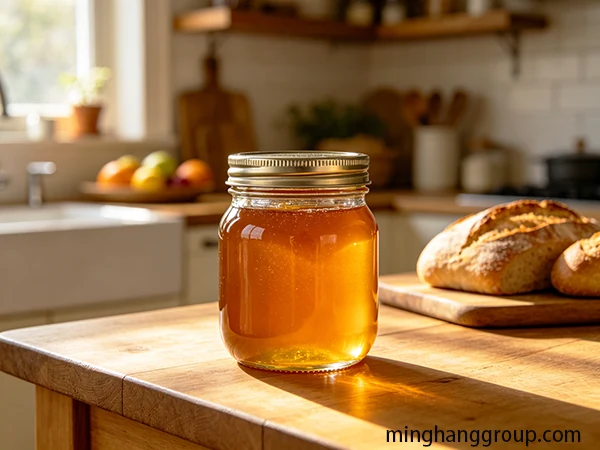
Perguntas frequentes
What are honey jar defects in bulk orders?
Honey jar defects in bulk orders include manufacturing and/or handling defects, including bubbles, thread distortion, rim chips, uneven thickness, and internal stress that can impact sealing, durability, appearance, or food safe attributes for large commercial orders.
Under the inspection standard of AQL, these defects are normally divided into three categories: critical, major and minor.
Are there any glass defect allowed in honey jars?
Common defects of glass honey jars are small, enclosed bubbles under 0.5 mm, light seams and superficial markings on the surface of glass jars which will not prevent the jars from sealing, machine compatibility or from being structurally sound.
The exact acceptance depends on contract AQL and brand positioning.
How do importers inspect honey jar quality defects?
Importers inspect honey jar quality defects using dimensional checks, leak testing, thermal shock testing, and sampling based on AQL standards, often supported by third-party pre-shipment inspection agencies.
Professional inspection goes far beyond visual review.
Why do honey jars fail leak tests even with correct lids?
Honey jars fail leak tests even with correct lids when thread tolerances, rim flatness, or neck finish dimensions vary outside closure specifications, causing incomplete vacuum sealing despite using the proper cap model.
The jar is often the real issue, not the lid.
What is the acceptable defect rate for bulk honey jars?
The acceptable defect rate for bulk honey jars depends on agreed AQL levels, but professional buyers often use 0.0 for critical defects, 1.0 for major defects, and 2.5 for minor cosmetic defects.
Anything undefined creates negotiation problems later.
The Hard Truth Buyers Learn Late
Glass seems simple.
Until it isn’t.
And that’s the trap.
Most honey jar wholesalers advertise customization, free samples, and low MOQ. Very few talk about defect thresholds, mold cycle wear, thread tolerance, or statistical inspection plans.
Why?
Because informed buyers ask harder questions.
And factories prefer easy orders.
CTA
If you are sourcing honey jars in bulk and need a supplier that provides real defect standards, full QC reports, wall thickness data, and free pre-production samples, our factory supports custom production with transparent inspection documentation.
Contact us for a free sample and detailed quality specification sheet before your next bulk order.

 PT
PT  EN
EN  FR
FR  DE
DE  RU
RU  IT
IT  ES
ES  AR
AR  TR
TR  KO
KO  JA
JA  ZH
ZH