
The cheapness of glass is seldom cheap.
This is the first lesson I learnt after looking at packaging projects where buyers are only concentrating on the price per unit and only realised that appearance, shipping damage, rejection rates and brand positioning have added up to a much higher final price. The price gap between Soda-Lime, High-Flint & Super-Flint is not just a matter of raw materials in the glass industry. It is derived from the chemical processes, furnace conditions, optical performance, production yield and expectations for the final product.
But what about the different prices of clear glass bottles?But why are some clear glass bottles $0.20 and the others several times more expensive?
They’re not the same materials.
Understanding Soda-Lime, High-Flint & Super-Flint Glass
The soda-lime glass is the basis for most commercial glass packaging. It covers most bottles, jars and all day-to-day containers, as it is both durable and widely available and is manufactured in an efficient way.
The typical constituents of soda-lime glass include about 70–74% silicon dioxide (SiO₂), about 12–16% sodium oxide (Na₂O) and about 8–12% calcium oxide (CaO). These ingredients are good chemically and the cost of production is also acceptable.
Premium packaging is another story though.
The high Flint and Super-Flint glass has been developed to make glass clearer of the green tinting that is caused by iron impurities in raw materials. Higher purity silica and further refining processes are used by manufacturers to produce its brightened and luxurious look.
The difference can be seen right away in products and industries like cosmetics, high quality beverages, perfumes, and specialty food packaging.
The chemistry of a bottle may not be known to a consumer.
They still see the difference.

Why Glass Material Cost Changes
The soda-lime glass price is mainly influenced by three factors:
First of all, purity of raw materials.
The more clearly the sand is needed, the lower the iron content of silica sand must be, and the more expensive the material.
Second, furnace operation.
Glass that is High-Flint and Super Flint is produced in a way that demands greater control of the temperature and cleaner production area. Color consistency may be affected by furnace contamination, increasing production management.
Third, manufacturing yield.
Higher standards of inspection may be needed for premium glass products. The bottles that are in normal production may not meet the luxury packaging requirements.
Silica Sand for Glass Manufacturing is one of the most significant industrial minerals in the U.S. and quality differences do impact applications, according to the U.S. Geological Survey. The most up-to-date mineral production data are available from the USGS Mineral Commodity Summaries for buyers.
Soda-Lime vs High-Flint Glass vs Super-Flint Glass Comparison
| Glass Type | Typical Application | Appearance | Relative Cost | Best For |
| Soda-Lime Glass | Food jars, beverage bottles, standard containers | Slight green tint | Low | Large-volume packaging |
| High-Flint Glass | Cosmetics, spirits, premium food | Clearer appearance | Medium | Brand-focused packaging |
| Super-Flint Glass | Luxury perfume, premium skincare, high-end bottles | Crystal-like clarity | High | Premium positioning |
What Is the Price Difference Between Soda-Lime, High-Flint and Super-Flint Glass?
This will vary depending on the bottle size, how intricate the design is, how the bottle is decorated, the order quantity, and the energy cost. But typical buyers in the industry look for:
- The baseline is the cost level of a soda-lime glass.
- High-flint glass: up to 50% more than the standard soda-lime glass.
- While specifications vary, super-flint glass is typically 50-150% more than ordinary glass.
When these differences are added to the frosting, coating, embossing, printing, and custom molds and molds, they will be increased.
A $0.05 material difference per bottle could add up to a big cost for 500,000 bottles.
That’s where the decisions of the buyer becomes strategic.
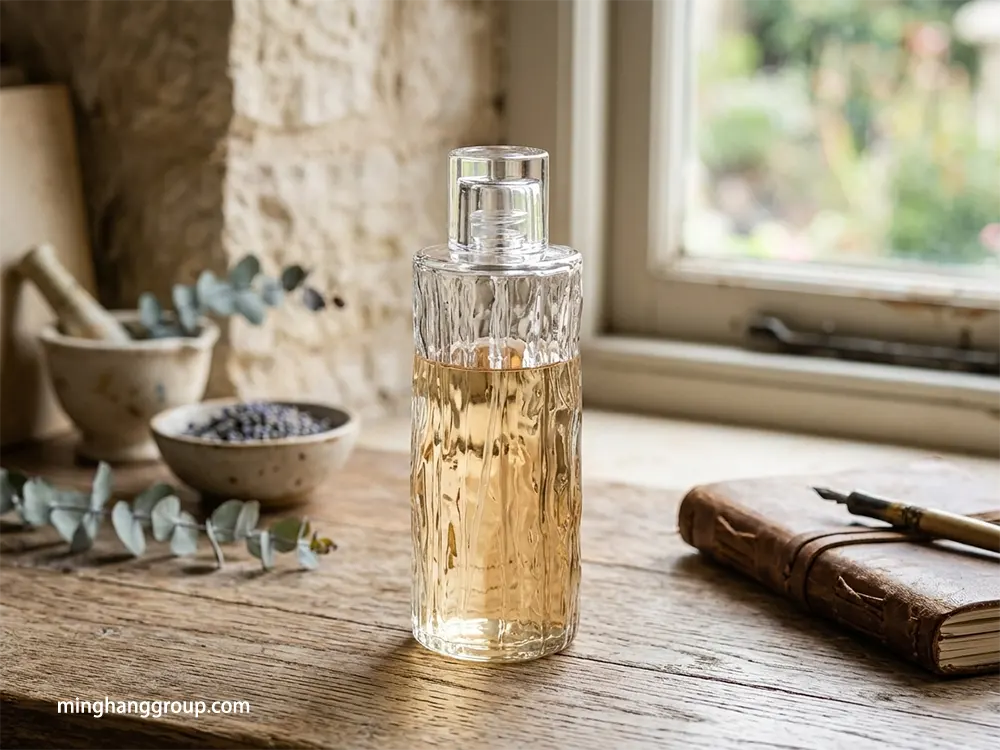
High-Flint Glass Cost: When Does It Make Sense?
There is a question among many buyers about whether the value is ‘worth it’ if upgrading from soda-lime to high-flint glass.
My answer?
Sometimes yes. Sometimes no.
Soda-lime glass is typically the obvious packaging material for mass-market products when packaging costs need to be extremely competitive.
For skin care, perfume, high-end drink and luxury food companies, however, it is a component of the product experience. Clear bottle benefits the appearance on the shelf, the picture and the customer perception.
Packaging research by McKinsey & Company has pointed out the importance of packaging on consumer purchasing choices, particularly in high-value consumer product categories.
Super-Flint Glass Pricing: Why Luxury Brands Pay More
The two types of super-flint glass are not costly, it’s the manufacturers that make them so.
More costly due to reduced production forgiveness.
Ultra-clear glass requires:
- A higher purity raw material is produced.
- Better furnace control
- More strict quality inspection
- A decline in tolerance to visual defects.
Super-flint glass, for instance, is the material that is sometimes preferred by luxury perfume brands because the pack is providing a message of value before the bottle is opened.
A transparent bottle isn’t just a bottle. It is a marketing too.

FAQ
- What does the difference in the price of soda-lime, high-flint and super-flint glass equal? Soda-lime, high-flint and super-flint glass will, of course, have different prices depending on the purity required, manufacturing difficulty, and quantity produced, with high-flint and super-flint, being higher in cost, due to higher raw material purity and better quality control.
- What are the uses of soda lime glass? Soda-lime glass is the most widely used commercial type of glass for bottles, jars and container manufacture due to its good strength, chemical stability, and low cost for large scale production.
- What is the sources of the additional cost of soda-lime glass compared to high-flint glass? The high-flint glass is more expensive than soda-lime glass because the raw materials used by the manufacturer are lower in iron, and the manufacturing process is more complex to obtain high transparency and a higher quality appearance.
- Which is better, super-flint glass or high-flint glass? Super-flint glass offers greater optical clarity than high-flint glass, and is primarily chosen for luxury packaging, where appearance, brand perception and premium presentation will outweigh costs of materials.
Final Thoughts
This is not only a price choice when selecting Soda-Lime, High-Flint and Super-Flint glass. It’s a combination of manufacturing economics, brand positioning and customer expectation. We will assist you with your glass material selection at MinghangGroup for your global brand according to the product specifications, market requirements and production objective. From development through mass production, our team can offer you a custom glass solution, whether you require standard soda-lime containers or high quality glass packaging with clarity.

 EN
EN  FR
FR  DE
DE  RU
RU  IT
IT  ES
ES  PT
PT  AR
AR  TR
TR  KO
KO  JA
JA  ZH
ZH