
Low iron glass vs flint glass perfume bottles may seem like a minor detail, but it can dramatically influence how a fragrance is perceived.
Last year, in our brightly lit warehouse, I compared two perfume bottles that looked almost identical. One instantly felt luxurious, while the other simply didn’t. It wasn’t the shape, the cap, or even the fragrance inside.
The problem was the glass.
The Core Difference Most Buyers Miss
Common flint glass typically has some impurities of iron (Fe2O3) in it, typically 0.1-0.3%. This gives a slight greenish/grayish color, particularly in the thicker areas such as the bottom. Low iron glass slashes ensure low iron content of less than 0.05% making the water as water-white as intended so your perfume can reflect light.
Your end customers might not have heard the term. They make a definite difference in the quality they sense.
I’ve seen people with lots of experience in importing learn this lesson the hard way. They play hardball price negotiation, take specifications at face value (which they often refer to as “clear glass”), and are handed off bulk containers with the tint removing the luxury feel. Shelf appeal evaporates. Returns spike. Retailers protest.
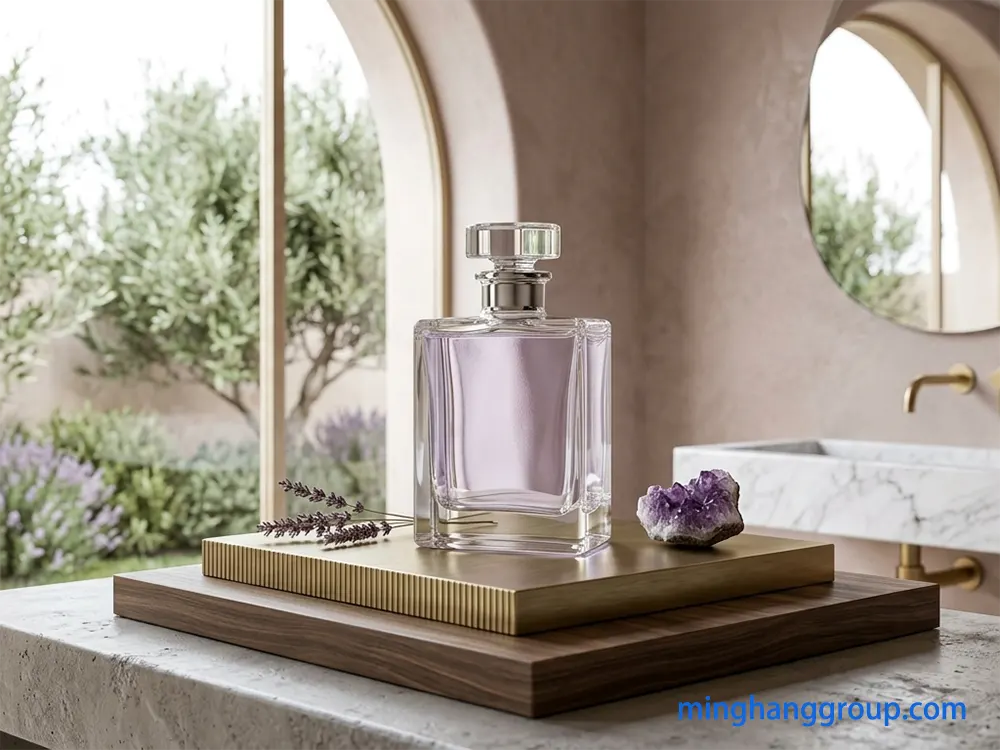
Why Low Iron Glass Perfume Bottles Matter for Premium Positioning
Low iron glass perfume bottles aren’t a marketing gimmick. They are a true visual solution. Standard flint tends to make pale citruses, soft florals or vibrant coloured juices look muddy or-off. Low iron is used to maintain the desired aesthetics.
However, am I being rude? Not all brands require it.
In opaque, heavily tinted and budget private-label lines, standard flint still works well and makes a significant cost saving – typically 15-25% on raw materials. There is a cost to chasing low iron everywhere and it becomes a form of virtue signaling. The smart buyer selects the right product type from the same brand fitting the product’s positioning and the price range.
Real-World Performance Data and Supplier Realities
Luxury packaging demand is driving premium extra-flint and low-iron growth over standards, according to market reports. Brands with high clarity glass see higher sell-through and reduced quality complaints.
After a difficult shipment in 2025, one European perfume house I’m following changed suppliers. The greenness of regular flint solicited consumer complaints about the “impurities” and almost resulted in a failure to meet visual specifications in department store contracts. The rework incurred thousands of delays and re-testing.
The added non-negotiable layer is testing for heavy metals. There is ongoing monitoring of potential leaching from packaging materials. Get current batch reports on demand at all times. Banks’ word is not the same as the customs or retailers’ word when they ask, “Are you compliant?When customs or retailers ask, “Are you compliant?” the banks’ word doesn’t count.
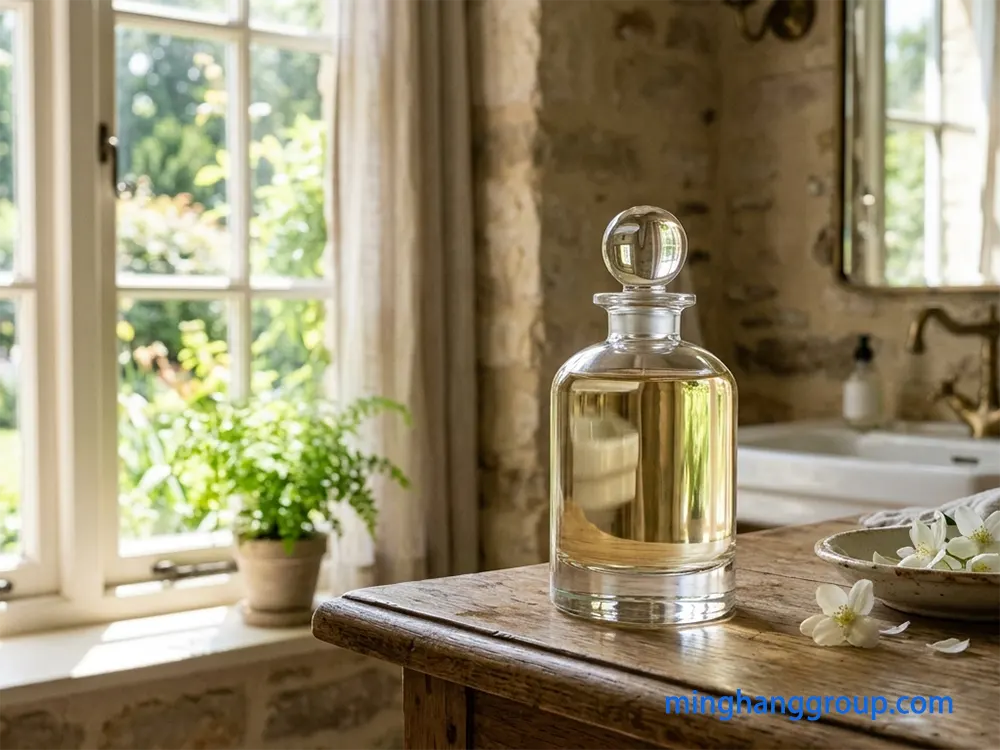
Practical Comparison for Decision Making
| Aspect | Standard Flint Glass | Low Iron / Extra Flint Glass | Typical Cost Impact (50ml bottle) |
| Iron Oxide (Fe2O3) | 0.1–0.3% | <0.05% | +18–30% for low iron |
| Visual Tint | Greenish or gray cast | True water-white clarity | Major difference in presentation |
| Light Transmission | 85–88% | 91–95%+ | Better shelf pop |
| Ideal Applications | Budget, colored, or opaque lines | Clear luxury fragrances, color-critical designs | Premium vs value positioning |
| Sourcing Considerations | Widely available, easier MOQs | Requires stricter verification | Potentially longer lead times |
This table gets past supplier hype. It is more expensive initially to have low iron. The return is achieved through increased perceived value, reduced rejections on filling and shipping and better brand positioning.
How to Verify Glass Quality Before You Commit
How to recognize low iron glass in the field? Simple field tests are very effective.
Compare samples with a pure white background in natural daylight. Look for uniformity of color on various thicknesses. Ask for spectrophotometry reports that provide a precise Fe2O3 reading.
If the supplier is hesitant to release the data from the lab, it is a red flag. If the supplier refuses to provide lab data or only provides marketing pictures, it is a red flag. Far too many “premium” claims I have witnessed fall apart when subjected to simple questioning.
Also advocate for complete material safety documentation. Verify adherence to target markets’ requirements to standards. Some additional questions upfront save for later headaches.
Common Pitfalls and Hard-Earned Lessons
First time importers often just consider MOQ and unit price. Not until it goes through quality control do they concern themselves with the composition of the glass. When the time has passed it will be too late.
There are others who will entertain a “extra clear” statement without question. There is a great deal of variation in marketing terminology from one factory to another. The only true measure of iron content and light transmission come from hard data.
Yes, recycled content can make clarity goals a challenge. Some suppliers add other materials that contain impurities (post-consumer glass). If clarity is essential, know your supplier’s raw material sourcing.
FAQs
Low iron glass is used as high clarity soda lime glass where the amount of Fe2O3 (iron oxide) is less than 0.05%, which provides the water-white clarity necessary for perfume bottles where accurate color representation adds to the high value of the product, compared to standard flint glass which provides a lower clarity (greenish tint) due to the higher amount of Fe2O3 in the glass.
The less expensive, but more common option is standard flint glass, which has a lower iron oxide concentration (0.1-0.3%) and gives a slight green or gray tint, and is a good choice for budget or colored perfume bottles, but not for high-end clear glass bottles.
The best glass for a perfume will depend on the color of the perfume and the audience for which it is designed. Low iron is ideal for luxury clear designs, standard flint is good for value lines or opaque designs.
The advantages of low iron glass benefits lie in their exceptional light transmission, no colour distortion of the perfume, increased perceived value and high shelf appeal, but it costs 15-30% more to the buyer.
Looking to get the perfect glass for your next production run? Leave a comment with your bottle specs, desired price point or fragrance details. Our factory can give you first-hand knowledge of whether or not low iron glass perfume bottles are worth it for you. Which option is right is evident in your sales and feedback.

 EN
EN  FR
FR  DE
DE  RU
RU  IT
IT  ES
ES  PT
PT  AR
AR  TR
TR  KO
KO  JA
JA  ZH
ZH